
Finding Springfield Resident Records
There is no single official list of everyone in Springfield. A search works best when it begins with a precise question. For a property, the Greene Assessor can connect a street address to a parcel number and legal-description context. For a recorded transfer, the Recorder of Deeds supplies the deed path. For a named court case, Missouri Case.net is the statewide starting point. Historical households belong in city directories, census microfilm, newspapers, and archival indexes. Each source is dated and narrow. None should be stretched into proof that every person at an address is known.
Use an address as written, including direction, street suffix, unit, and ZIP. Use a full name with a middle initial, approximate age or year, and a known place when possible. A name hit may be someone else. A parcel owner may receive mail elsewhere. A directory entry captures one publication year. Keeping those limits beside the result makes a Springfield residents directory search useful without making a false claim about a household.
- Normalize the address or assemble a full name and a second identifying detail.
- Use the Assessor for a current parcel, its situs address, owner field, and legal-description lead.
- Take the parcel key or legal description to the Recorder for deeds, liens, or a book and page reference.
- For an older household, test the name and old address in Library Center directories, cross-reference volumes, and census material.
- When an index is incomplete or unavailable, send the named custodian a focused Missouri Sunshine Law request with a date range and record type.
Note: An index result is a lead; the issuing office or original image is the verification step.
Springfield Resident Records Offices
Greene County offices are the practical first stop for most Springfield record trails. The Assessor organizes parcel and assessment information. The Recorder preserves recorded land instruments and marriage-license records. The County Clerk is the election authority and county Sunshine request route. They answer different questions, even when a name appears in more than one system. The full address-led sequence belongs on the Springfield street directory; the offices below are the starting points that make that sequence possible.
Greene County Recorder of Deeds
940 N Boonville Ave
Springfield, MO 65802
417-868-4068
Greene County Assessor
940 N Boonville Ave, Room 35
Springfield, MO 65802
417-868-4101
Greene County Elections
940 N Boonville Ave, Room 113
Springfield, MO 65802
417-868-4060
The Recorder is normally open weekdays from 8:00 a.m. to 4:30 p.m. The Assessor uses the same weekday schedule, except its Wednesday opening is 8:30 a.m. County Clerk hours are normally 8:00 a.m. to 5:00 p.m. Check an office notice before a visit, especially when a request needs an original book or certified copy.
Springfield Property Search Keys
The Greene Assessor public portal is a strong current-record starting point because it offers four distinct ways into the same parcel system. Search by address when the street location is known. Use a PIN when a prior record supplies a parcel number. An owner search can provide an assessment record, while map search works from a selected parcel or area. The county says public information is updated nightly, but ownership and sale information depend on the latest purchase and recording. Maps are useful research tools, not legal descriptions.
| Portal mode | Best starting key | Use it for |
|---|---|---|
| Address | Situs or street address | Parcel and physical-property context |
| PIN | Parcel identification number | A repeatable parcel lookup |
| Owner | Recorded owner name | Assessment and ownership lead |
| Map | Selected parcel or area | Identify, buffer, measure, and reports |
The Greene Assessor public-access landing page shows the free access route and its disclaimer. It should be used with the date of the search in mind.
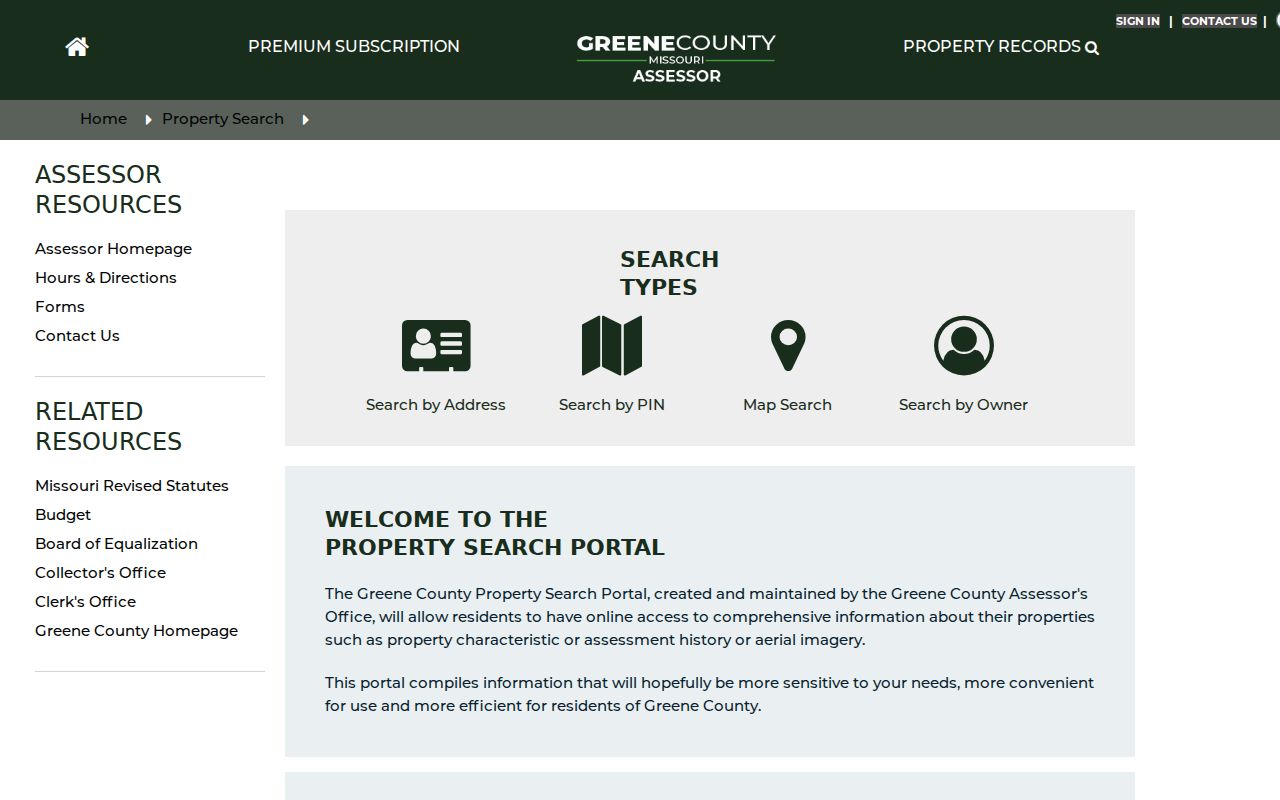
That public-access route is the bridge between a Springfield address and the parcel details needed for a recorded-instrument search.
The Greene County Assessor office page provides the office-side contact route when a portal field, legal description, or correction question cannot be settled online.
Use the physical-property record as a record lead, then verify any boundary or title issue with the appropriate deed or survey source.
Springfield Address Record Layers
A Springfield address can describe several things at once, and those things do not always agree. The situs address is the physical parcel. A tax mailing address tells the Assessor where to send a notice. A postal ZIP guides delivery. A city-limit layer is municipal geography. An old directory entry is a dated publication address. Treating them as one field is a common way to attach a person to the wrong place.
| Layer | What it can support | What it cannot settle |
|---|---|---|
| Parcel situs | Physical location of assessed property | Who currently occupies it |
| Tax mailing address | Where tax correspondence goes | The owner’s residence |
| Postal ZIP | Mail delivery geography | Municipal boundary or identity |
| Directory address | A household’s presence in a publication year | Continuous or current residence |
That separation is especially important where an older address crosses Springfield’s 1947 renumbering. Library examples show 415 Mitchell St becoming 415 E Olive St and 810 E McDaniel becoming 1008 E McDaniel St. Record the old form, new form, source year, and source name before deciding whether two entries describe the same place.
Note: A parcel map is approximate, and its geometry should never replace a legal description or licensed survey.
Current Springfield Resident Directory Sources
Current Springfield resident records are scattered by purpose. A property record can name an owner. A deed can name transaction parties. A voter system can confirm registration only under its own security and release rules. Case.net is for public court cases, not a residence list. City staff contacts identify public employees and the office to ask for a municipal record. The most reliable result names both the record type and the date rather than calling every name a current resident.
| Record source | What it can identify | Custodian | Access route |
|---|---|---|---|
| Assessor parcel card | Owner, situs, mailing field, parcel context | Greene County Assessor | Free public portal |
| Recorder instrument index | Recorded parties, deed and lien references | Recorder of Deeds | Portal, counter, or phone |
| Voter registration route | Exact-data registration match | Greene elections and Missouri SOS | Statutory limits apply |
| Case.net | Public court case and docket information | Missouri Courts | Statewide search categories |
| City contact directory | Public staff and correct office | City of Springfield | Category or name search |
When the question concerns one person rather than a property or record type, compare two independent sources and dates. The Springfield resident lookup explains that verification process. Do not treat an application, a mailing field, a case caption, or a directory listing as proof of current occupancy.
The Greene County Clerk office route connects elections, Sunshine requests, licenses, archives, and tax administration. It is a useful fallback when a record series is known but has no searchable public index.
The Clerk can direct a focused request to the office holding a county record, but a request should name the series, date range, and preferred format.
Springfield Deed Index Trail
For property history, the Recorder starts with the most specific key available. Its real-estate landing page offers document-number, name, document-type, book/page, affected-book/page, and legal-description routes. Individual forms were protected by a Human Verification challenge during the August 2026 research, so a blocked form is not proof that no record exists. Bring the document number, book and page, or legal description to the counter or call the Recorder when needed. An address alone usually needs an Assessor legal-description step first.
The Greene County Recorder of Deeds maintains the office route for real-property records, marriage-license information, tax liens, and military discharges.
A recorded deed ties named parties to an instrument and legal parcel, but it does not prove that either party lived there.
Springfield Voter Record Boundaries
Missouri’s voter lookup is intentionally an exact-data system. It asks for the registered first name, last name, date of birth, last four Social Security number digits, and county. A failed result can reflect spelling, county, date, or registration-status differences. It is not a reliable way to search a street for a roster of people. Missouri law also limits public voter-file release and protects some residential addresses through court orders or the Safe at Home program.
- Registration match
- A result under the portal’s exact fields and applicable access rules.
- Precinct record
- An election geography and dated registration context, not a complete household list.
- Protected address
- An address that may be closed under statutory or court-authorized confidentiality procedures.
Use the Missouri voter lookup only with authorized exact information. An address-based polling or precinct check can be a narrower, better fit when the research question is geographic.
Use records lawfully. Springfield name and address research should support family history, civic questions, or property research, never monitoring, harassment, or harm.
Springfield Court Record Checks
Missouri Case.net searches by litigant name, filing date, case number, or scheduled hearings and trials. Select Greene County or the appropriate court before comparing results. A useful result log preserves the court, case number, parties, filing date, case type, docket events, and disposition. Common names and initials are not enough. Juvenile, sealed, expunged, confidential, and protected material is not public, and remote document access has its own limits.
The Greene County Circuit Clerk provides a copy route for records that need a document rather than an index result. The Clerk states that newer civil and domestic cases are generally online from 2008 forward, while criminal and traffic coverage is generally online from 2006 forward. Older paper cases need clerk assistance.
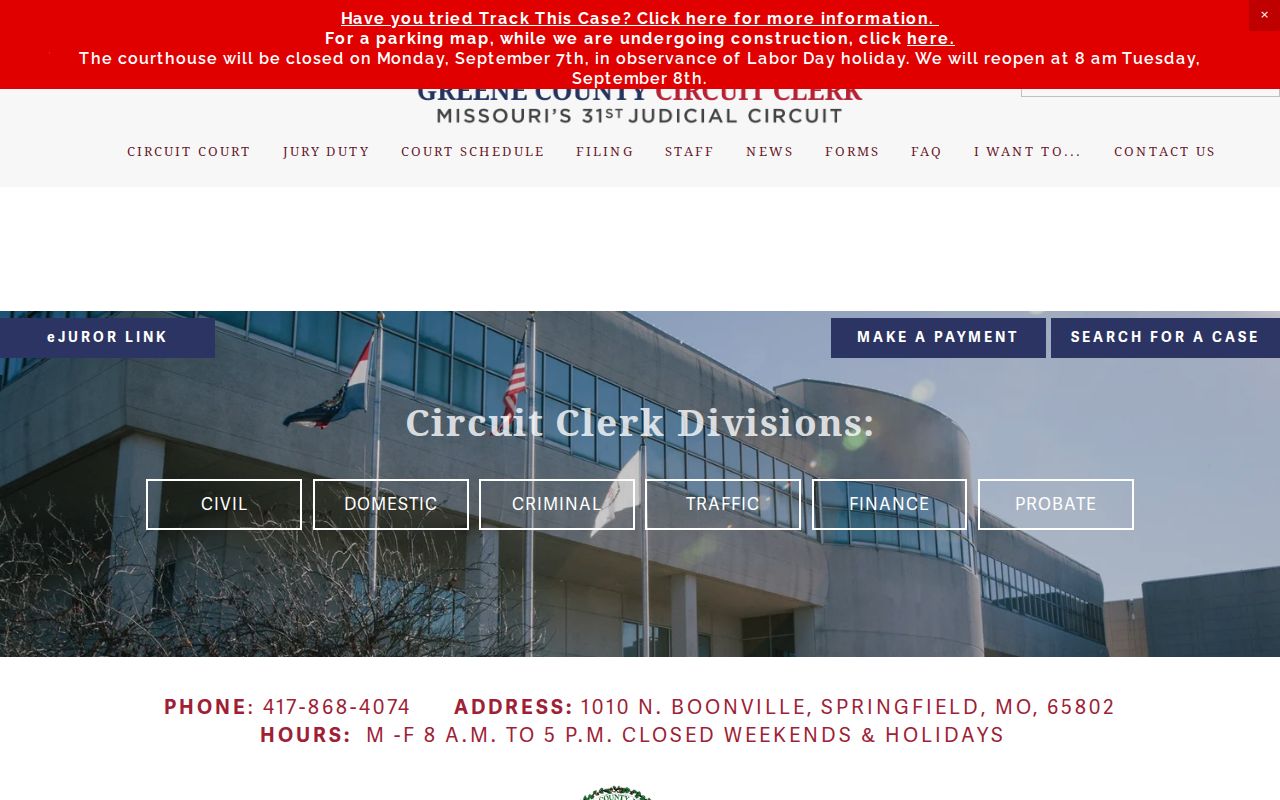
A court record can document a case event. It should not be treated as a broad identity profile or a final conclusion without the docket and source date.
Springfield Vital Record Custodians
Vital records have a different path from directories and property files. Missouri statewide birth and death reporting begins in 1910, while marriage and divorce reporting begins in 1948. Certified copies require direct and tangible interest under Missouri rules. The Springfield-Greene County Health Department is a local registrar, but availability and form type differ from the state route. For historical work, the State Archives death index covers certificates from 1910 through 1964 and is a research lead rather than a certified record.
The Missouri vital-record ordering route distinguishes local and state procedures, eligibility, and timing.
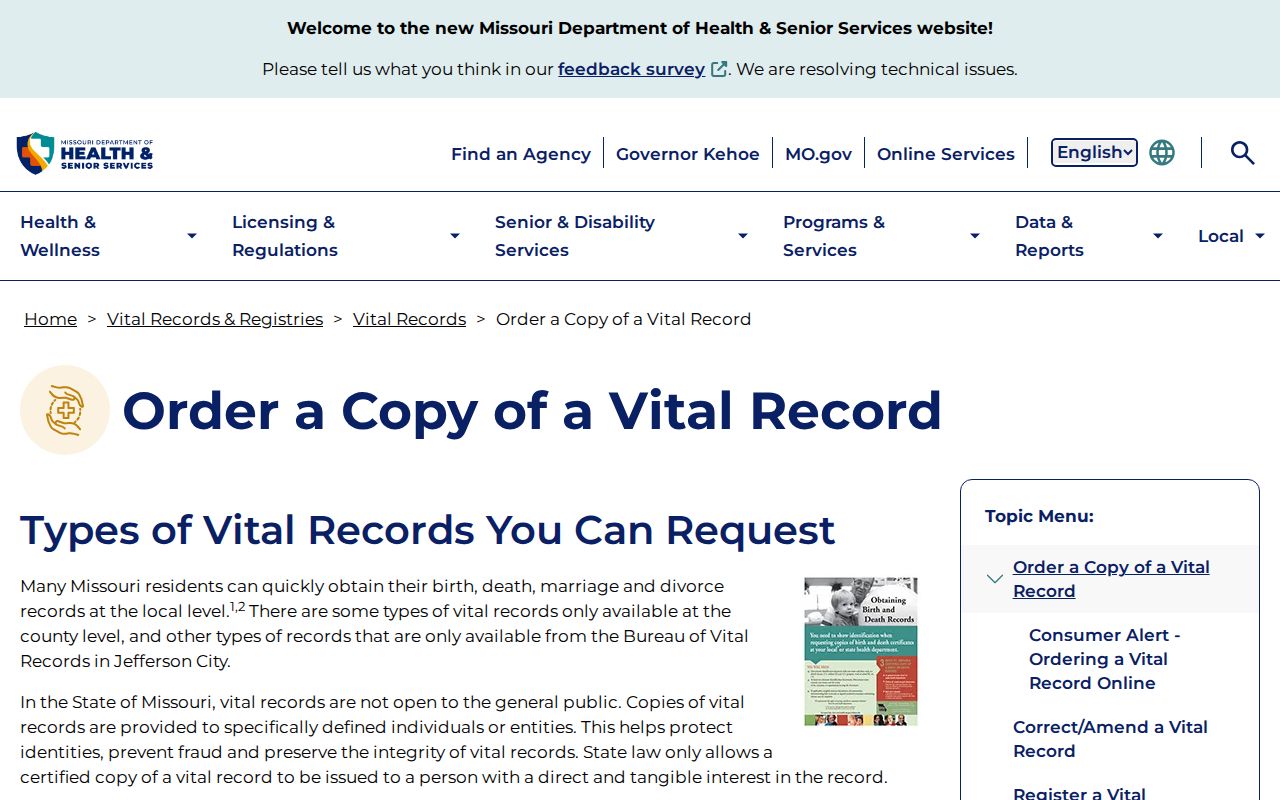
Ask for the right product: a county marriage certificate, a DHSS statement, and a circuit-court divorce decree are not interchangeable records.
Springfield Name Match Checks
A search result needs at least two matching identifiers before it becomes a useful Springfield record lead. Pair a full name with a middle initial, age or year of birth, an address, a known business, a case number, or a parcel key. Then compare dates and geography. A county address, postal city, city limit, and campus or institutional address are not automatically the same location. When the match remains uncertain, preserve that uncertainty rather than selecting the most convenient name.
The state’s unclaimed-property search is another name-based public database, but it supports a claim workflow rather than a residency conclusion.
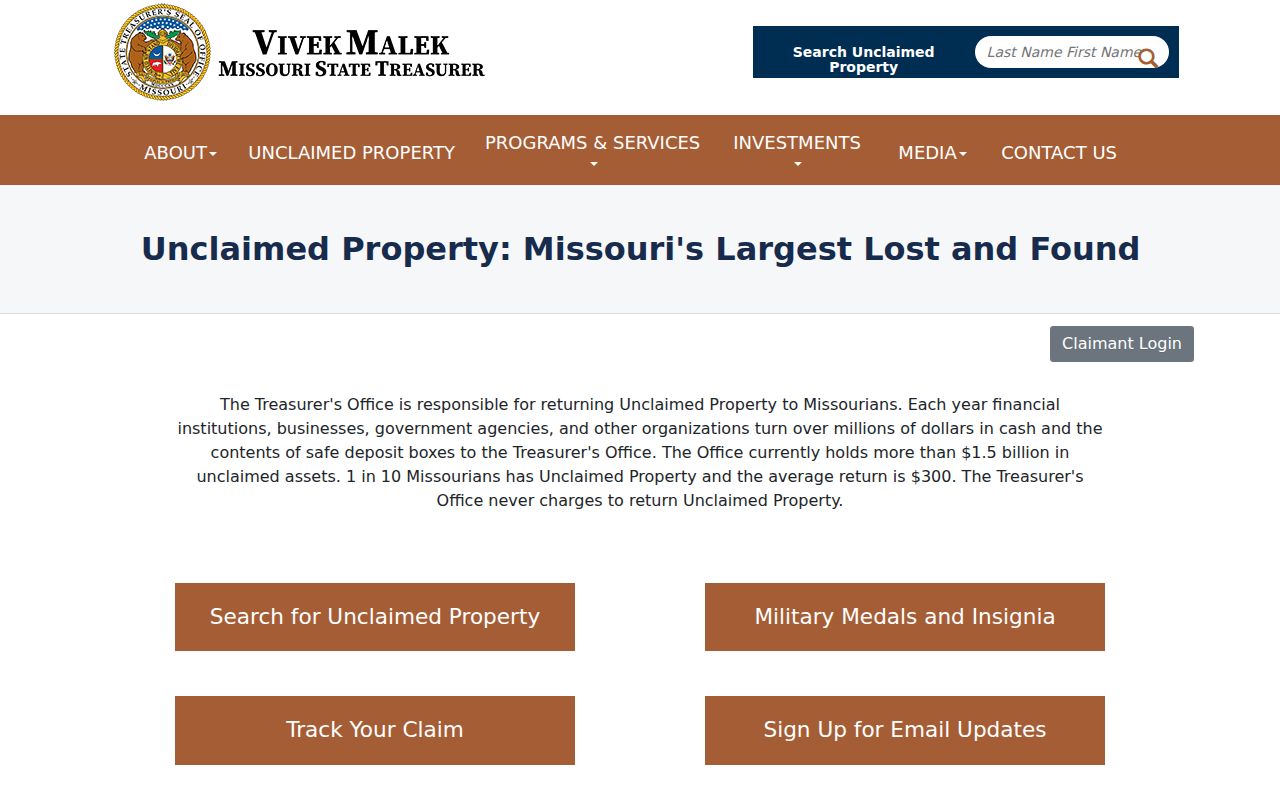
Its value is a name-and-claim lead; it does not establish a current Springfield address or relationship.
Historic Springfield Resident Directories
Library Center holds Springfield city directories from 1878 and 1881 through 1900 as reproductions, 1901 through 1969 on microfilm, and 1970 to the present in closed storage. It also holds telephone books, cross-reference directories, census microfilm, newspapers, Sanborn maps, yearbooks, and genealogy indexes. Selected early directory volumes are keyword-searchable online for 1890, 1899, 1901 through 1917, and 1919 through 1920, while the more complete shelf remains a local-history resource.
A city directory can place a name or household at an address for a particular year and may include occupation, a business advertisement, or a street and dwelling-number index. Cross-reference directories reverse that work from address to name, with microfilm coverage for 1950 through 1970 and later years in closed storage through 2006. Check the publication year, spelling, household detail, and 1947 address conversion before linking an entry to a modern address.
Note: A historical directory records a dated publication fact, not continuous residence or present-day occupancy.
Springfield Archives Record Depth
The Greene County Archives records list reaches farther back than modern online portals. Its series include probate court from 1833 to 1990, circuit court from 1833 to 1991, County Clerk material from 1833 to the present, tax books from 1833 to the present, descriptive property sheets mainly from the 1950s through the 1970s, and Recorder deed books from 1833 into the 1960s. Those ranges help choose the right custodian when a modern search has no answer.
The archive’s 1833 to 1877 deed index was assembled from microfilm and original indexes. It includes deeds along with incorporations, wills, chattel mortgages, railroad items, and records involving enslaved people. The archive warns of missing pages, gaps, duplicates, one-sided entries, and name variants. Preserve the book or page reference and verify the original image or volume before relying on an index line.
North Boonville brings current county offices and the Archives close together, but they are separate record destinations with different series and access methods.