
Springfield City Directory Collections
The Springfield-Greene County Library local-history collections hold the main local run in several formats. The shelf begins with an 1878 volume and 1881 through 1900 reproductions. Microfilm covers 1901 through 1969, while volumes from 1970 to the present are in closed storage. That distinction matters: a missing result online may simply mean the needed book is on microfilm or must be requested from staff. The same collection also preserves telephone books, cross-reference volumes, census film, newspaper resources, maps, yearbooks, and local indexes that can test a directory entry.
| Springfield collection | Years available | Where it is held | How to use it |
|---|---|---|---|
| City directories | 1878; 1881–1900 | Library Center | Reproductions for name, address, and occupation research |
| City directories | 1901–1969 | Library Center | Microfilm |
| City directories | 1970–present | Library Center | Request closed-storage volumes from staff |
| Cross-Reference Directories | 1950–1970; 1971–2006 | Library Center | Microfilm, then closed storage, for address-to-name work |
| Telephone books | 1916–1960; 1961–present | Library Center | Microfilm, then closed storage, as a later contact clue |
A Springfield city directory is a dated publication, not a complete roll of everyone in town. The library notes that coverage and format differ by period. Check the catalog and ask staff for a specific year instead of assuming that every volume has the same index or online access.
Springfield City Directory Access
Library Center is at 4653 S Campbell Ave in Springfield, with local-history help at 417-616-0534. Most of the historical materials are used there. Photocopiers, microform printers, and the library's Ask a Local Historian service make it possible to preserve a page image and ask about a difficult street or surname. The library also provides access to its catalog and selected digital collections; HeritageQuest can be used from home with a valid library card. Bring the exact name, address form, and year range, because staff can retrieve closed-storage items more efficiently when the request is narrow.
See the Library Center research-collections page before a visit.
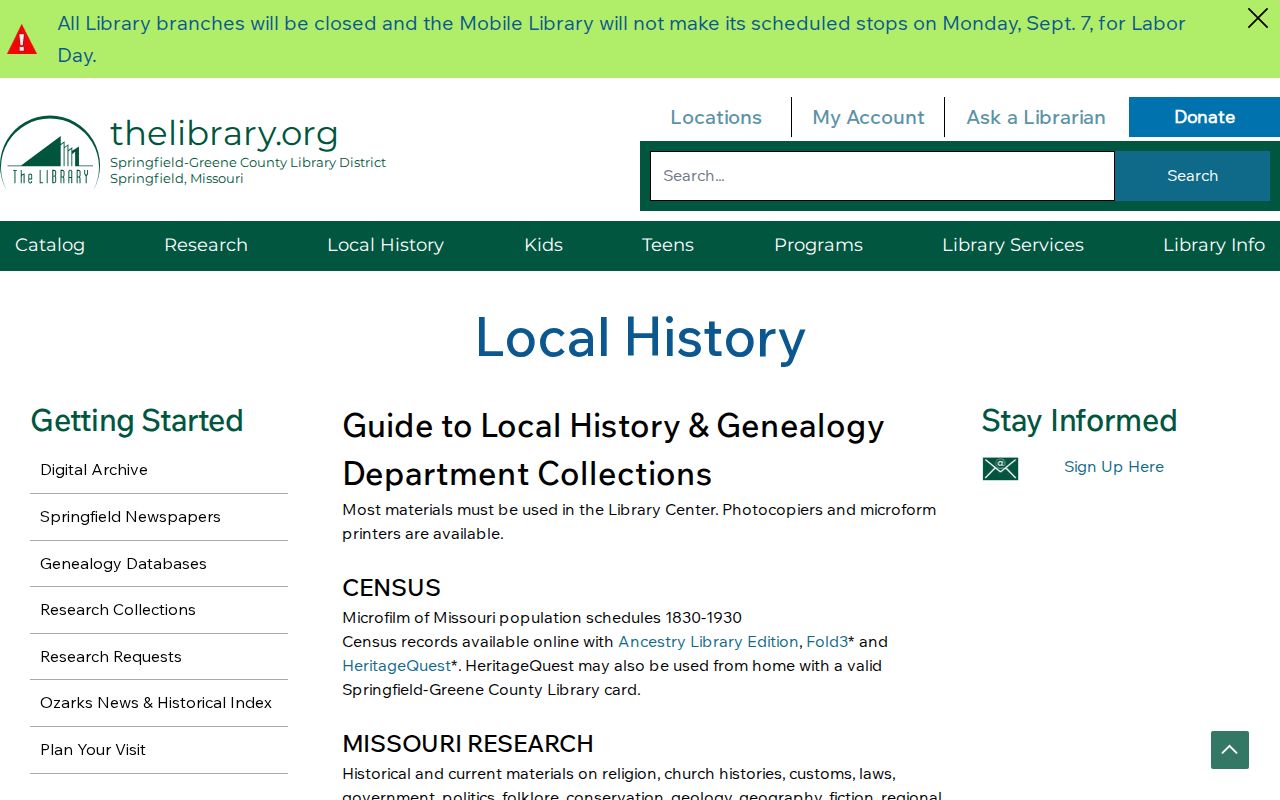
The local-history collection is the practical starting point because its directories sit beside census, newspaper, map, and genealogy resources that help separate same-name households.
Note: Closed-storage years are a staff request, not evidence that a Springfield directory year is unavailable.
Digitized Springfield City Directories
The library reports keyword-searchable digitized volumes for 1890, 1899, 1901 through 1917, and 1919 through 1920. Those early books can be a quick first pass for a surname, address, business, or advertisement. Online publication is limited by copyright, so the digital run does not replace the broader local collection. Search a name variant, then inspect the scanned page rather than relying only on a search result. A result can be an advertisement or an index reference instead of the household entry sought.
Start with the Springfield-Greene County Library digital archive for the library's wider local-history material.
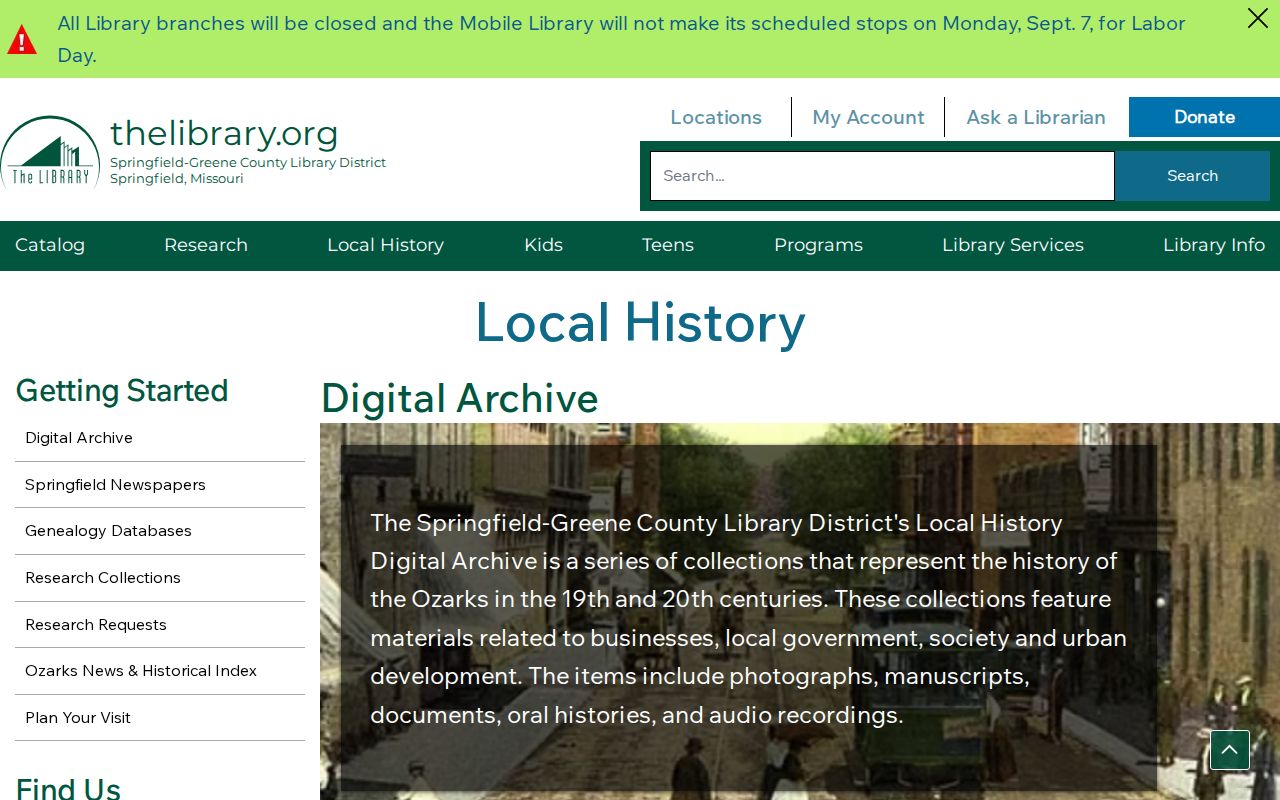
The digital archive adds documents, photographs, manuscripts, oral histories, and local-government material that can supply context for a dated directory listing.
The FamilySearch library catalog also shows digitized Polk's Springfield directory examples for 1969 and 1970.
Those catalog entries are useful leads for those two volumes, but they do not establish that every Springfield city directory year is digitized.
Springfield City Directory Timeline
The collection's changing format is part of the evidence. A researcher working in a microfilm year needs a different access plan from someone opening a digitized early volume or asking for a closed-storage book. The library's holdings also show why a reverse search by address may begin later than a surname search. Keep the format in the research log, along with the publication year and the page image or call number. That record makes it easier to return to the same Springfield city directory volume and distinguish a scan from a transcription or index result.
- 1878 is the earliest Springfield city directory volume identified in the Library Center holdings.
- 1881 through 1900 are available as reproductions at Library Center.
- 1901 through 1969 are held on microfilm.
- 1950 through 1970 Cross-Reference Directories are on microfilm for reverse address work.
- 1970 through the present city directories, and 1971 through 2006 cross-reference volumes, are in closed storage.
- Digitized, keyword-searchable early volumes include 1890, 1899, 1901–1917, and 1919–1920.
These are library collection ranges, not a promise that every entry or index appears in every volume. Confirm the desired year and circulation status with the local-history desk before travelling or requesting material.
Reading a Springfield City Directory
A Springfield city directory entry usually works best as a compact set of leads. The digitized early volumes can show a resident or household surname and given name, occupation, street address, business advertisements, and, in some volumes, a surname index or street and dwelling-number index. Compare the entry with the same year's indexes before deciding that a name and address belong together. Occupation and other household clues can help distinguish people with similar names. The research did not reproduce an individual entry, so a live volume should be read page by page when the exact wording matters.
| Household or resident name | The surname and given name used by that volume, which may be an initial or variant spelling. |
|---|---|
| Occupation | A useful comparison point when more than one Springfield resident has the same name. |
| Street address | The printed address for that year, which may need a 1947 conversion before comparison with a modern address. |
| Business or advertisement | Possible evidence of a local commercial connection, separate from a household listing. |
| Index reference | Some volumes include alphabetical surname and street or dwelling-number indexes that support a second check. |
- Criss-cross directory
- The library calls these Cross-Reference Directories. They support reverse address-to-name and name-to-address research for their stated years.
- Surname index
- An alphabetical route to a name in volumes that include one. It is a finding aid, so compare it with the full entry.
- Street or dwelling-number index
- An address-ordered route in some volumes that helps check the printed address against a household listing.
Springfield City Directory Address Changes
Springfield renumbered street addresses in 1947. The library gives two conversion examples: 415 Mitchell St became 415 E Olive St, and 810 E McDaniel St became 1008 E McDaniel St. A family trail can look broken when the search uses only today's address. Keep four fields together in a research log: directory year, old address, modern address, and source note. That simple checkpoint prevents an old block number from being mistaken for a move or a different household.
The library's directory and renumbering article describes the early digitization and the local conversion issue.
Ask a Local Historian about the developing conversion database or house-history aid when a Springfield city directory address changes at the 1947 boundary.
Springfield City Directory Companions
Directories gain strength when paired with local sources that answer a different question. The Dr. William K. Hall Index covers Springfield newspaper genealogy items from 1900 through 2009, including births, deaths, marriages, divorces, engagements, and anniversaries. Census microfilm at Library Center covers Missouri population schedules from 1830 through 1930. The library also holds Sanborn map sets for Springfield, plat and topographic maps, yearbooks, and the Lena Wills collection. A map can place a block in context, while a newspaper index or census schedule can test the household named in a directory.
For deeper regional material, consult the Ozarks Genealogical Society collection.
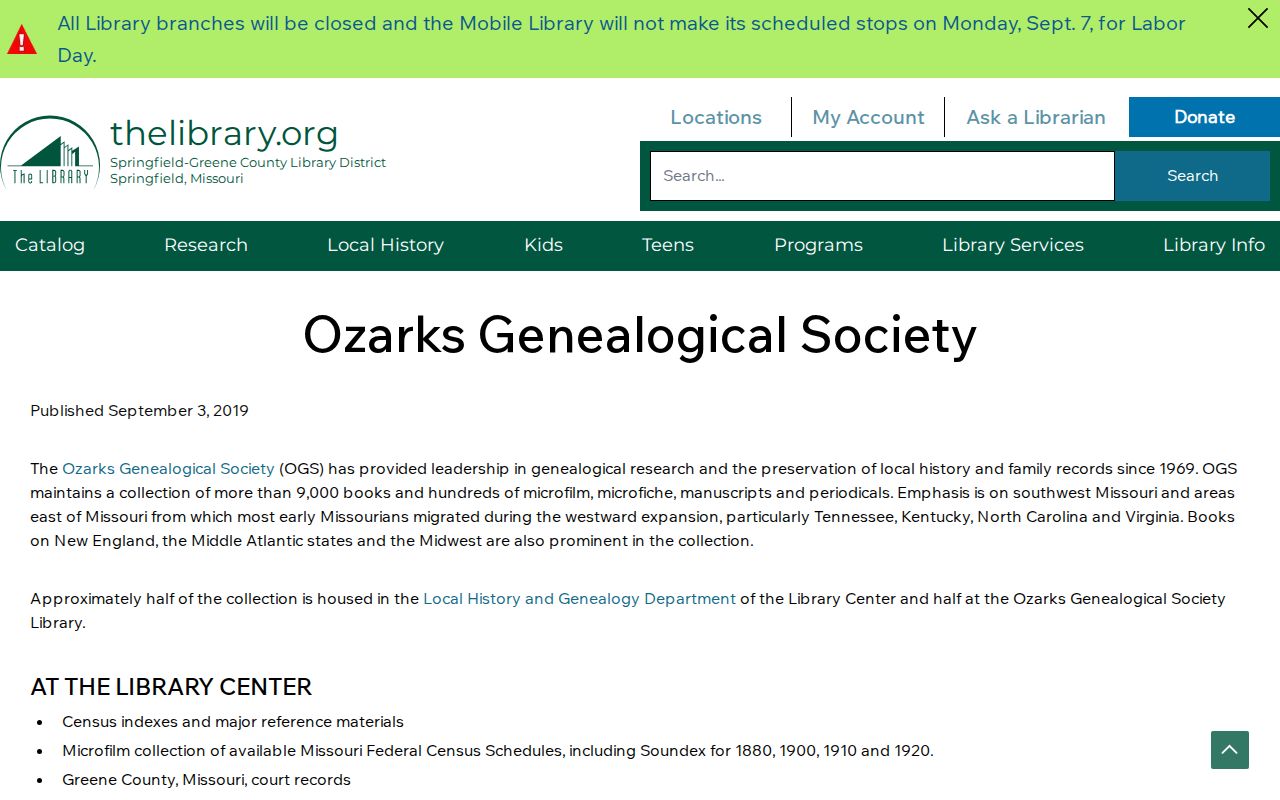
OGS reports more than 9,000 books as well as microfilm, manuscripts, and periodicals, with material at Library Center and the OGS Library. Its regional focus can help when a Springfield household arrived through a southwest Missouri migration path.
Springfield City Directory and Archives
Directories describe a dated presence. Greene County archival books can add a different layer, such as a deed, tax, probate, map, or school record. The Greene County Archives lists a 1905 Springfield directory among its online links, plus older deeds, probate, maps, tax material, and school records. Use those links as finding aids and verify the original image or book where available. The historical deed index for 1833 through 1877 includes more than deeds, and the archive warns about gaps, missing pages, conflicting entries, and spelling variants.
The SHSMO Springfield manuscript index adds collection numbers, descriptions, date ranges, and finding-aid links for material such as family papers, oral histories, maps, and photographs.
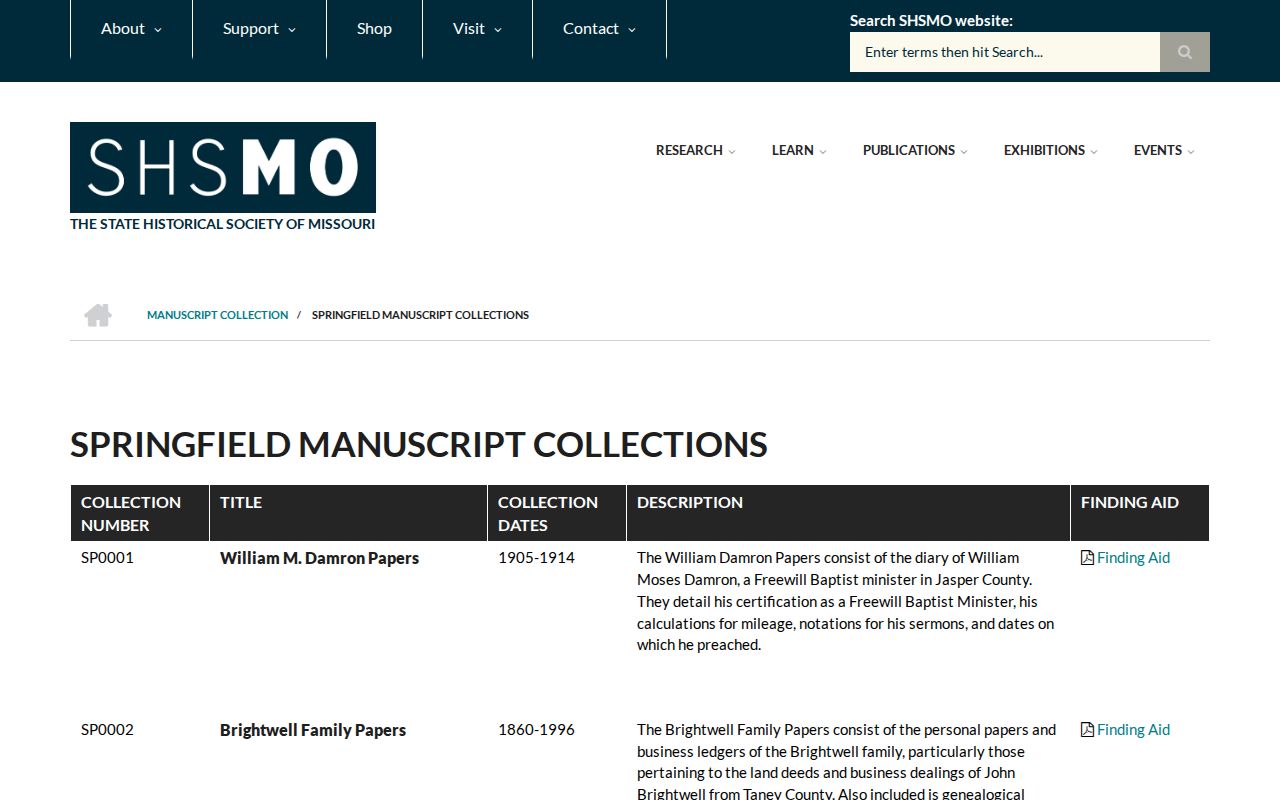
SHSMO recommends a research request before arrival when material may be restricted or stored elsewhere, and says transfers between research centers can take one to three weeks.
Tracing Springfield City Directory Households
Trace a household across a run of directory years, not by copying one isolated listing. Start with the name as printed, then work forward and backward. The sequence can show an address change, a new occupation, an index variation, or a disappearance that needs a separate record check. Pair the directory decade with census and newspaper evidence, and use deed, probate, cemetery, death-index, or court material only to verify a specific transition. A name disappearing from a volume may reflect a move, death, different spelling, or incomplete coverage. It does not settle the reason by itself.
- Locate the earliest likely Springfield city directory entry by surname, then inspect the full page and any index reference.
- Record the year, spelling, occupation, address, and source format before moving to the next and prior volumes.
- Check the street or dwelling-number index, or the Cross-Reference Directories when their coverage fits the date.
- Pair directory observations with the applicable census and the Hall Index or newspaper material, keeping same-name households separate.
- Use Archives, OGS, or SHSMO material when a particular family, organization, address, or business needs a primary source.
A directory find that needs a modern identity check can be compared with a narrow official record through the Springfield resident lookup. Keep the historical date attached to every result.
Note: A Springfield city directory supports a dated address and household lead, not continuous residence or a current identity claim.